
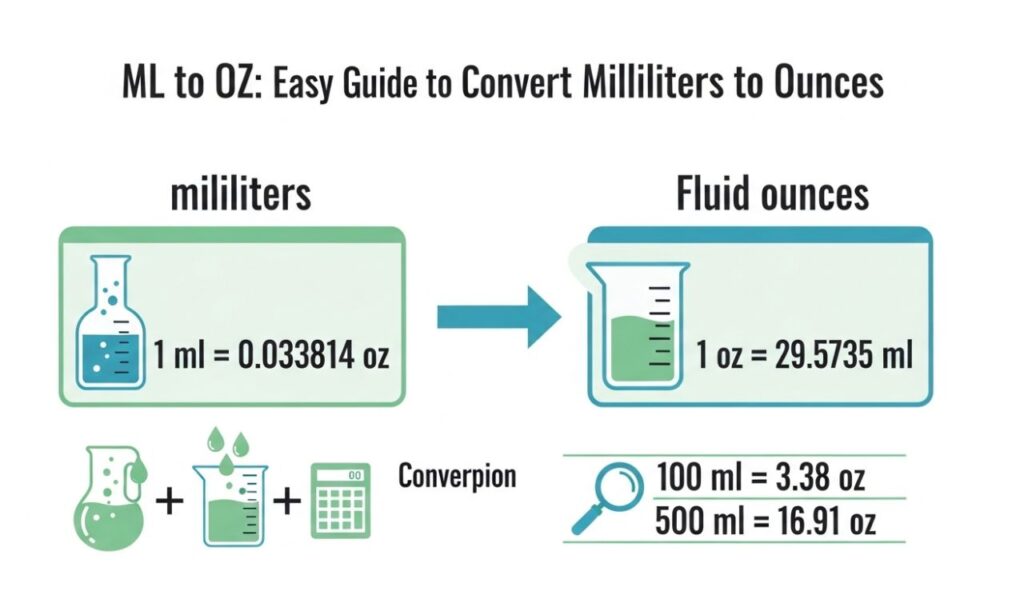
ML to OZ: Easy Guide to Convert Milliliters to Ounces
Understanding ml to oz conversion is essential in many everyday situations, especially when dealing with cooking, baking, medicine, and beverages. Different countries use different measurement systems, which can sometimes create confusion when following recipes or measuring liquids. While many countries use the metric system and measure liquids in milliliters (ml), others commonly use ounces (oz).
If you have ever wondered how to convert ml to oz, the process is actually very simple. Once you know the basic conversion formula, you can easily switch between these two units. Learning this conversion can help you follow international recipes, measure ingredients accurately, and understand product labels more clearly.
In this article, we will explain the ml to oz conversion formula, provide useful examples, and show you how to convert different quantities quickly and easily.
What Does ML to OZ Mean?
The term ml to oz refers to converting milliliters (ml) into fluid ounces (oz). These units are both used to measure liquid volume but belong to different measurement systems.
Milliliters (ML)
Milliliters are part of the metric system, which is widely used around the world. One milliliter represents a small unit of liquid volume.
Milliliters are commonly used for:
-
Cooking measurements
-
Medicine dosages
-
Beverage containers
-
Scientific measurements
Ounces (OZ)
Ounces are part of the imperial and US customary systems. When discussing liquids, the correct term is fluid ounces.
Fluid ounces are commonly used in:
-
United States recipes
-
Beverage measurements
-
Food packaging
-
Nutrition labels
Because these two systems are different, the ml to oz conversion helps translate between them.
The ML to OZ Conversion Formula
The basic formula for ml to oz conversion is simple.
1 milliliter = 0.033814 fluid ounces
This means you can convert milliliters to ounces by multiplying the milliliter value by 0.033814.
Conversion Formula
Ounces = Milliliters × 0.033814
This formula works for most standard conversions.
Common ML to OZ Conversion Examples
Here are some common ml to oz conversions that can help you quickly estimate liquid measurements.
| Milliliters (ml) | Ounces (oz) |
|---|---|
| 30 ml | 1.01 oz |
| 50 ml | 1.69 oz |
| 100 ml | 3.38 oz |
| 250 ml | 8.45 oz |
| 500 ml | 16.91 oz |
| 1000 ml | 33.81 oz |
These values are frequently used in recipes and beverage measurements.
Why ML to OZ Conversion Is Important
Learning ml to oz conversion is helpful in many real-life situations. Because different countries use different measurement systems, understanding both units can prevent confusion.
Cooking and Baking
Many recipes from different parts of the world use either milliliters or ounces. Converting ml to oz ensures accurate ingredient measurements.
Beverage Measurements
Drink containers, cocktail recipes, and coffee measurements often use ounces, while bottles may display milliliters.
Medical Dosages
Some medications list liquid amounts in milliliters. Understanding conversions helps people interpret measurements more easily.
International Travel
When traveling, product labels may show liquid volumes in unfamiliar units. Knowing ml to oz conversions helps interpret these labels.
Quick Tips for Converting ML to OZ
Although the exact formula is useful, you can also remember a few simple approximations.
-
30 ml ≈ 1 oz
-
240 ml ≈ 8 oz
-
500 ml ≈ 17 oz
These rough estimates help you perform quick mental conversions without needing a calculator.
Differences Between US and UK Ounces
When discussing ml to oz, it is important to note that there are two types of fluid ounces:
US Fluid OunceThe US fluid ounce equals about 29.57 ml.
UK (Imperial) Fluid Ounce
The UK fluid ounce equals about 28.41 ml.
Most conversions online use the US fluid ounce, which is the standard for many recipes and food products.
Because of this difference, conversions may vary slightly depending on the system used.
Tools for ML to OZ Conversion
Today, many tools make ml to oz conversions quick and convenient.
Online Conversion Tools
Many websites offer instant conversion calculators that allow users to enter milliliters and see the equivalent ounces.
Smartphone Apps
Measurement conversion apps can help convert units instantly, even offline.
Smart Assistants
Digital assistants and voice search tools can also quickly calculate conversions.
These tools are especially helpful when dealing with large or unusual measurements.
Practical Examples of ML to OZ
To better understand ml to oz, here are some practical everyday examples.
Water Bottle
A typical small water bottle may contain 500 ml, which equals about 16.9 oz.
Coffee Cup
A standard cup of coffee is often around 240 ml, which equals about 8 oz.
Medicine Syrup
Liquid medicine doses may range from 5 ml to 10 ml, which equals approximately 0.17 oz to 0.34 oz.
These examples show how the conversion is used in daily life.
Frequently Asked Questions About ML to OZ
How many ounces are in 100 ml?
100 ml is approximately 3.38 ounces.
Is 250 ml equal to 8 oz?
250 ml is slightly more than 8 oz. It equals about 8.45 ounces.
How many ml are in 1 oz?
1 ounce is approximately 29.57 milliliters.
Why are ml and oz both used?
Different countries follow different measurement systems. The metric system uses milliliters, while the US often uses ounces.
Conclusion
Understanding ml to oz conversion is a useful skill that helps in cooking, baking, medicine measurement, and everyday tasks. Because milliliters and ounces belong to different measurement systems, knowing how to convert between them ensures accuracy when working with liquids.
By using the simple formula 1 ml = 0.033814 oz, you can easily convert any milliliter value into ounces. Remembering a few common conversions and using digital tools can also make the process even faster.
Whether you are following an international recipe, measuring beverages, or reading product labels, learning ml to oz conversions will make liquid measurements much easier to understand.