
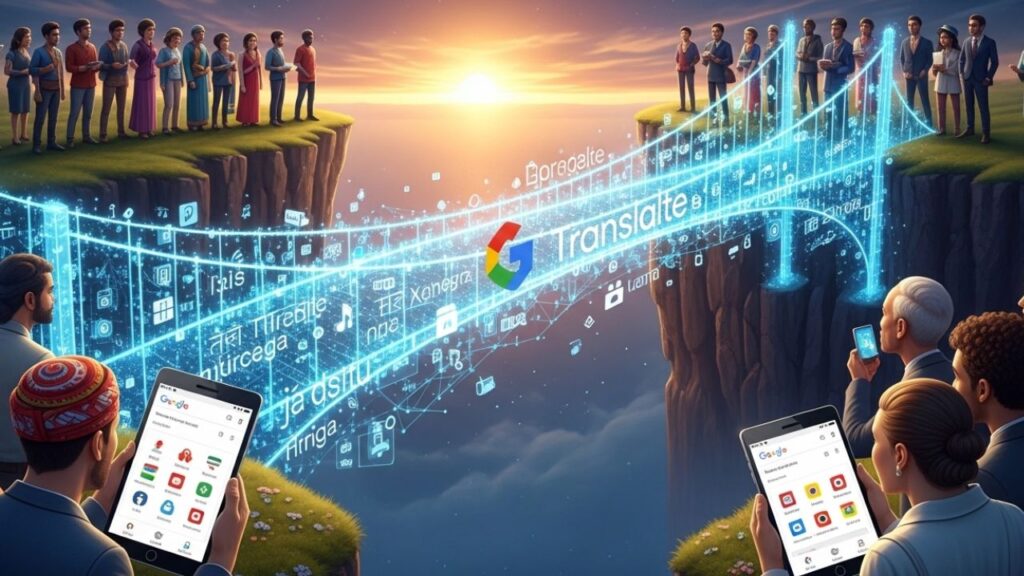
Google Translate: Bridging Language Barriers in the Digital Age
Google Translate has transformed the way people communicate across languages. Launched in 2006, it has grown into one of the most widely used translation tools in the world, helping individuals, businesses, and organizations understand and share information in multiple languages. This article explores Google Translate’s history, features, impact, and future developments.
What is Google Translate?
Google Translate is a free online service that translates text, speech, images, and web pages between over 130 languages. It uses advanced algorithms and artificial intelligence to provide quick and accessible translations.
Key Features
- Text translation for documents, emails, and messages
- Voice input and output for real-time communication
- Image translation using the camera for signs, menus, and labels
- Website and document translation for global accessibility
The History of Google Translate
Google Translate was launched in April 2006 as a simple statistical machine translation tool. Initially, it relied on bilingual text corpora to analyze language patterns.
Evolution Over Time
- 2006–2016: Early statistical methods focused on word patterns and probabilities.
- 2016: Transitioned to Neural Machine Translation (NMT), improving accuracy by translating entire sentences rather than individual words.
- Present: Continues to use AI and machine learning to provide more natural, context-aware translations.
How Google Translate Works
Google Translate uses sophisticated algorithms and artificial intelligence to understand and translate languages.
Neural Machine Translation (NMT)
- NMT processes whole sentences, considering context for more accurate translations.
- Reduces errors compared to word-by-word translation.
Artificial Intelligence and Machine Learning
- Google Translate learns from vast amounts of multilingual data.
- Continuously improves translations through user feedback and AI training.
Applications of Google Translate
Google Translate is used worldwide in personal, educational, and professional contexts.
Personal Use
- Traveling abroad to understand signs, menus, and local communication
- Communicating with friends or family who speak different languages
Business and Professional Use
- Translating emails, documents, and websites for global operations
- Supporting customer service across multiple languages
Education and Research
- Assisting students and researchers in accessing resources in foreign languages
- Enabling cross-cultural collaboration and learning
Advantages of Google Translate
Google Translate offers numerous benefits to individuals and organizations.
- Free and accessible on web and mobile platforms
- Supports over 130 languages with offline translation options
- Provides instant translations for text, speech, and images
- Promotes global communication and understanding
Limitations and Challenges
Despite its usefulness, Google Translate has limitations.
Accuracy
- Translations may lack nuance, idiomatic understanding, or cultural context.
- Complex sentences or specialized terminology can lead to errors.
Dependence on AI
- While AI improves over time, it cannot replace professional human translators in critical contexts like legal or medical documents.
Privacy Concerns
- Users sharing sensitive information may need to be cautious, as translations are processed through Google servers.
Google Translate in the Future
Google Translate continues to evolve with advancements in AI, machine learning, and natural language processing.
Real-Time Communication
Future updates may provide more accurate real-time translations for live conversations and video calls.
Context-Aware Translation
AI improvements will allow translations that better capture tone, style, and context, making communication more natural.
Integration with Other Services
Integration with tools like Gmail, Google Docs, and Chrome will further streamline multilingual communication for personal and professional use.
Global Impact of Google Translate
Google Translate has democratized access to information and facilitated global communication.
- Promotes cross-cultural understanding
- Supports businesses in expanding to international markets
- Enables education and collaboration across language barriers
By making translation accessible to billions, it has helped connect the world like never before.
Conclusion
Goo gle Tran slate has revolutionized communication across languages by combining AI, machine learning, and accessibility. While it cannot replace human translators in all scenarios, it has become an indispensable tool for travel, business, education, and personal use. As technology continues to advance, Goo gle Tran slate is set to become even more accurate, context-aware, and essential in bridging global language barriers.