
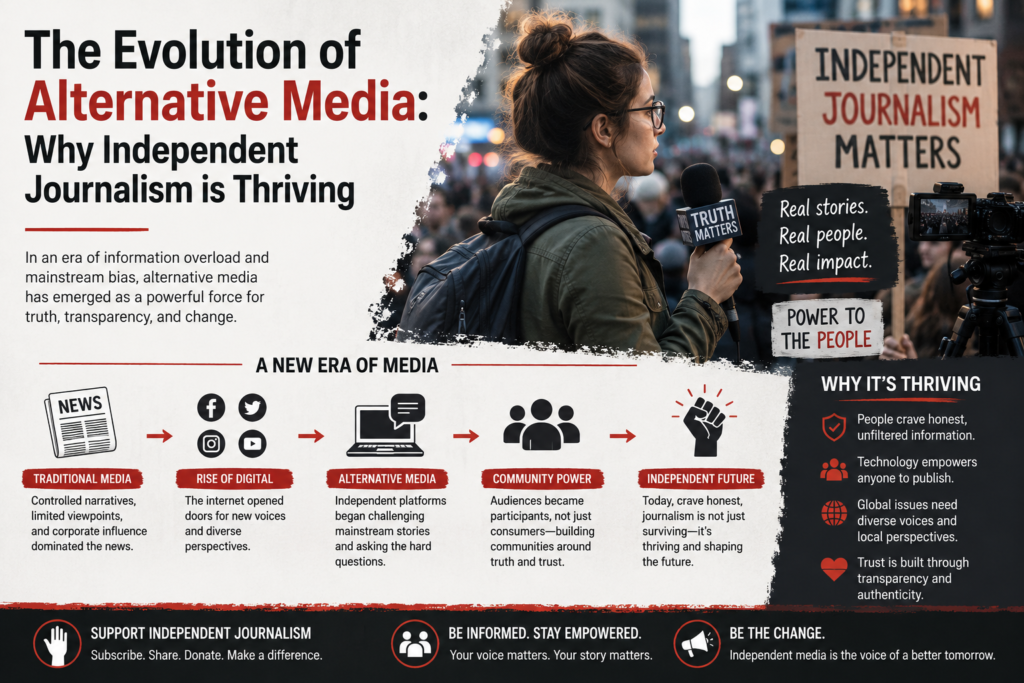
The Evolution of Alternative Media: Rise of Independent Journalism in the Digital Age
In an era of instant information, the media landscape has undergone a profound transformation. Once dominated by a handful of powerful television networks and newspapers, news consumption now thrives across diverse digital platforms. Readers increasingly seek out raw, unfiltered perspectives on breaking news and geo-political developments. This shift highlights the evolution of alternative media and the growing prominence of independent voices.
Mainstream media faces historic lows in public trust. Surveys show only a small fraction of Americans express high confidence in traditional outlets, with trust eroding across political lines due to perceived biases, corporate influences, and selective reporting. As a result, audiences are turning to independent platforms that prioritize transparency and diverse viewpoints.
Why Mainstream Media is Losing Trust
The decline didn’t happen overnight. For decades, legacy media enjoyed near-monopoly status, shaping public narratives through controlled channels. However, several factors accelerated skepticism:
- Perceived Bias and Polarization: Many viewers notice consistent framing that aligns with specific political or corporate interests rather than neutral facts.
- Sensationalism Over Substance: The 24/7 news cycle often prioritizes clicks and ratings, leading to rushed reporting and unverified claims.
- Lack of Accountability: High-profile corrections, retracted stories, and “anonymous sources” have fueled doubts about journalistic integrity.
- Economic Pressures: Layoffs, consolidation, and declining ad revenues have shrunk newsrooms, reducing investigative depth.
Pew Research and other studies document this steady erosion, with trust in national news organizations dropping significantly over recent years. Younger generations, in particular, bypass traditional gatekeepers entirely, favoring direct access via social media, newsletters, and specialized sites.
The Rise of Independent Journalism
Independent journalism fills the gaps left by mainstream outlets. Freed from corporate boards and editorial filters, these voices deliver in-depth analysis on geo-political conflicts, economic shifts, and underreported stories.
Key drivers include:
- Technological Democratization: Anyone with a smartphone or laptop can publish, livestream, or analyze events in real-time. Platforms like Substack, Rumble, and personal blogs empower citizen journalists and seasoned reporters who left legacy roles.
- Audience Demand for Authenticity: People crave “raw” coverage—uncut footage, primary documents, and on-the-ground reporting without spin.
- Niche Expertise: Independent outlets often specialize in areas like international relations, financial transparency, or cultural analysis, offering deeper context than soundbite-driven TV segments.
This movement echoes historical alternative media, from 1960s underground papers to modern digital networks. Today, it scales globally, connecting communities around shared interests in truth-seeking.
How Digital Platforms Are Changing News Consumption
Modern technology has revolutionized access to information. Algorithms surface content based on user preferences, while interactive formats—podcasts, live threads, data visualizations—engage audiences more effectively than static articles.
Breaking News in Real Time:
- Social media and messaging apps enable instant dissemination. Geo-political events, from elections to conflicts, unfold publicly with eyewitness accounts.
- Independent analysts provide rapid context, challenging official narratives when warranted.
Personalized and Diverse Perspectives:
- Users curate their feeds, following multiple sources for balanced views. This contrasts with the one-size-fits-all approach of traditional broadcasts.
- Long-form content flourishes: detailed explainers, investigative threads, and expert roundtables that legacy media rarely matches due to time constraints.
Bullet-point advantages of digital shift:
- Accessibility: Mobile-first design reaches global audiences 24/7.
- Interactivity: Comments, polls, and shares foster community discussion.
- Transparency: Many creators link sources, share methodologies, and engage directly with readers.
- Sustainability: Subscription models and crowdfunding support quality work without heavy ad reliance.
Yet, this freedom brings challenges like misinformation and echo chambers. Critical thinking remains essential for consumers navigating the information ecosystem.
Emerging Platforms Covering Global Events
Networks dedicated to alternative perspectives have gained significant traction. For instance, platforms focusing on unfiltered global updates, such as amg news, provide readers with alternative angles on current affairs that often diverge from dominant narratives. Many visit for comprehensive coverage of topics overlooked elsewhere.
These sites emphasize primary sources, whistleblower insights, and multi-perspective analysis, appealing to those seeking depth on geo-political developments.
The Role of Digital Magazines and Lifestyle Analysis
Beyond hard news, modern media blends information with lifestyle, culture, and long-form analysis. Readers want context that connects world events to daily life—economics, technology, health, and society.
Digital magazines like magtimes.net exemplify this evolution, offering curated insights, guest contributions, and broader thematic explorations that complement breaking news. Mag times serves as a hub for such content, helping audiences process complex issues through accessible formats.
This hybrid approach—news plus thoughtful analysis—builds loyal communities and sustains independent operations.
Challenges and the Future of Media
Independent media isn’t without hurdles. Monetization remains difficult without massive scale. Algorithm changes, platform policies, and legal pressures can limit reach. Quality varies widely, requiring readers to verify claims.
Looking ahead:
- AI and Tools: Will assist fact-checking and personalization but raise new ethical questions.
- Decentralization: Blockchain or web3 models may further empower creators.
- Hybrid Models: Successful outlets will blend independence with professional standards.
The reinforcing cycle is clear: declining mainstream trust fuels alternative growth, which in turn pressures legacy media to adapt.
Empowering Informed Citizens
The evolution of alternative media marks a return to journalism’s roots—questioning power, amplifying unheard voices, and prioritizing truth over narrative. As digital platforms continue transforming consumption, audiences gain unprecedented agency.
Whether following fast-moving geo-political updates or reflective pieces on societal shifts, the future belongs to those who seek diverse, verifiable information. By supporting rigorous independent work and exercising discernment, readers can navigate this dynamic landscape effectively.
In a world of information overload, the demand for authentic voices ensures independent journalism will only grow stronger. The question isn’t whether alternative media will thrive, but how society will harness it for a more informed public discourse.