The Architecture of Achievement: How Digital Simulations are Redefining Professional Training in 2026
There is a quiet revolution happening inside the offices of hospitals, logistics firms, assisted living facilities, and technology companies. It does not involve hiring freezes or mass layoffs. It involves the way professionals learn—and more critically, the way they prove they have learned. In 2026, the architecture of professional achievement has been fundamentally redesigned.
From Passive Reading to Active Performance
For decades, professional certification followed a predictable, if inefficient, model: read the material, highlight the key passages, take a practice quiz, and hope the information stuck. The dominant learning philosophy was passive absorption—consume enough content, and eventually competence would follow.
That model is collapsing under the weight of its own inadequacy. Cognitive research published in the last five years consistently shows that passive reading produces a retention rate of roughly 10% after 72 hours. Active recall, by contrast, produces retention rates that are three to four times higher. The implication is not subtle: the way most professionals have studied for certifications is almost perfectly designed to make them forget what they’ve read.
The professionals who are moving ahead in 2026 understand this. They have replaced static study guides with high-fidelity simulation environments that replicate the actual exam experience—pressure, timing, question structure, and all.
Data-Driven Diagnostics: The New Competitive Edge
Precision is now what sets exceptional performers apart from mediocre ones. The most effective certification candidates in fields ranging from healthcare administration to IT security are not studying harder. They are studying smarter, guided by granular diagnostic data that tells them exactly where their knowledge breaks down.
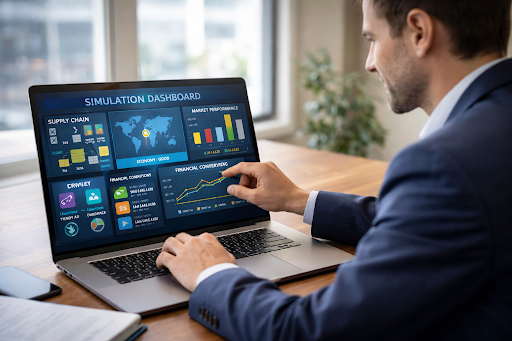
Modern simulation platforms track performance at the sub-topic level. After each practice session, a candidate doesn’t just see a score—they see a map. Which domains are strong, which are weak, where time was lost, and which question types produced the most errors. This feedback loop transforms every incorrect answer into actionable intelligence rather than a source of discouragement.
It’s 2026, and just reading about a subject is no longer enough to pass a major exam. High-fidelity simulations have changed the game, allowing people to practice in environments that mirror the real thing. If you want to ace a medical or technical certification, you need to be doing Practice test questions and answers every single day. This creates a cycle of constant improvement where mistakes don’t feel like failures—they feel like progress. This way, the actual test is a breeze rather than a nerve-wracking event.
The Assisted Living Sector: A Case Study in Urgency
No industry illustrates the stakes of this shift more acutely than assisted living and elder care. Facilities across North America are facing a structural shortage of qualified Qualified Medication Administration Personnel (QMAP). With an aging population putting immense pressure on care infrastructure, facilities cannot afford to wait months for new hires to complete traditional certification timelines.
Simulation-based preparation has become a direct answer to this crisis. Candidates preparing for QMAP certification using diagnostic practice environments are completing their preparation in significantly less time—without compromising the quality of their knowledge. The stakes in medication administration are not abstract. A poorly prepared candidate is a risk to real patients. The pressure to get certification right has made high-fidelity exam simulation not a luxury, but a professional obligation.
What High-Performers Actually Do Differently
Across industries, the highest-performing certification candidates share a common methodology. They begin with a diagnostic baseline—a full-length simulation that reveals their current competency map. They then target weak domains with focused practice sessions, re-testing frequently to measure retention gains. And critically, they do not study until they feel confident. They study until the data confirms consistent accuracy.
This approach—sometimes called mastery-based progression—consistently produces candidates who not only pass their certification exams but perform at a higher level on day one of their professional roles. The knowledge sticks because it was built through active retrieval, not passive exposure.
In 2026, professional training is no longer about the time you put in. It is about the intelligence of how you spend that time. Digital simulation has raised the bar—and the professionals who embrace it are clearing it with room to spare.