
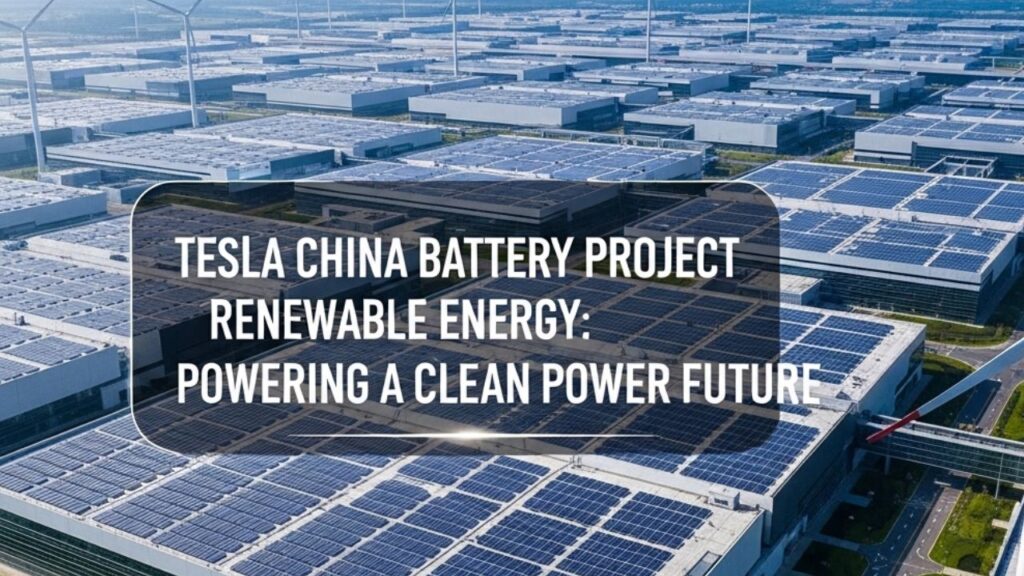
Tesla China Battery Project Renewable Energy: Powering a Clean Power Future
The Tesla China battery project renewable energy initiative marks a significant milestone in the global transition to clean and reliable power systems. As countries worldwide scale up their use of solar and wind power, managing the intermittent nature of renewables becomes increasingly important. The Tesla China battery project renewable energy effort focuses on deploying large‑scale energy storage solutions to help balance grid demand, support renewable generation, and reduce reliance on fossil fuels.
In China — currently the world’s largest market for renewable energy installations — this project positions Tesla not only as an electric vehicle leader but also as a key player in utility‑scale energy infrastructure.
What Is the Tesla China Battery Project Renewable Energy Initiative?
The Tesla China battery project renewable energy initiative centers on building a grid‑scale energy storage station in Shanghai using Tesla’s Megapack battery systems. In June 2025, Tesla signed an agreement worth approximately $557 million (about 4 billion yuan) with the Shanghai local government and China Kangfu International Leasing to construct what is expected to be the largest grid‑scale battery energy storage station in China.
This site will deploy Tesla Megapack systems — large‑format lithium‑ion batteries designed for utility use — to store excess renewable electricity and dispatch it when energy demand peaks.
Why the Tesla China Battery Project Renewable Energy Matters
Enhancing Renewable Integration
Renewable energy sources like solar and wind power are intermittent by nature — solar peaks during the day, while wind patterns vary. Without storage, excess clean energy can go unused, and grids still depend on fossil fuel plants during peak demand. The Tesla China battery project renewable energy initiative helps capture and store this surplus electricity, making it available when needed most.
By storing electricity during low demand and releasing it during peak periods, grid stability improves and the utilization of renewable power increases. This contributes to a more efficient and sustainable energy system.
Supporting Grid Stability
Large‑scale battery installations act as smart grid regulators, ensuring that supply and demand are aligned in real time.This capability is critical in modern electric systems that increasingly rely on distributed and variable energy sources.
What Makes Megapack Central to the Project
At the heart of the Tesla China battery project renewable energy effort are Tesla’s Megapack batteries. These units are designed for utility‑scale storage and offer modular deployment for large energy systems.
Advanced Battery Technology
Each Megapack integrates:
- High‑density lithium‑ion battery cells
- Advanced thermal management systems
- Power electronics to regulate grid interactions
- Software for real‑time energy response
Together, these elements allow Megapack systems to function effectively as part of a modern electricity grid, improving stability and reducing waste.
Shanghai Megapack Factory
To support this initiative, Tesla built a dedicated Megapack production facility in Shanghai. This factory produces thousands of Megapack units annually — at times reaching 10,000 units per year — boosting China’s capacity for utility‑scale storage installations.
At full production, this facility can supply storage capacity that helps stabilize multiple regional electricity networks.
Environmental and Economic Impact
Reducing Carbon Emissions
The Tesla China battery project renewable energy initiative contributes to lowering carbon emissions by enabling greater penetration of renewable power. Stored clean electricity can displace fossil‑fueled generation, reducing greenhouse gas emissions and lowering overall pollution levels.
Enabling Efficient Grid Management
Large‑scale battery systems like Megapack reduce the need for expensive and polluting “peaker plants” — fossil fuel power stations that only run during high demand. Instead, stored renewable power can be deployed when needed, increasing energy efficiency and cost effectiveness.
Job Creation and Industrial Development
Projects of this scale create demand for local expertise in manufacturing, installation, monitoring, and ongoing operations — contributing to economic development and skilled employment opportunities.
Challenges and Market Dynamics
Competition in Energy Storage
Although the Tesla China battery project renewable energy initiative is significant, Tesla faces competition from major Chinese battery manufacturers such as Contemporary Amperex Technology Co. Limited (CATL) and BYD, both of which have extensive global battery production capabilities.
China’s energy storage market is growing rapidly as the country deploys more renewables and upgrades grid infrastructure. This competitive environment pushes companies to innovate and offer more cost‑efficient solutions for utilities.
Political and Trade Context
Tesla’s involvement in China’s energy infrastructure comes amid broader trade and geopolitical dynamics between China and other nations. Despite this, the project shows ongoing cooperation and investment in local energy solutions.
Future Prospects for Tesla and Clean Energy in China
The Tesla China battery project renewable energy initiative marks a deeper shift in Tesla’s business strategy — from focusing mainly on electric vehicles to becoming a significant provider of energy infrastructure. This transition aligns with global trends toward decarbonization and smarter, more resilient power systems.
As China continues to expand renewable energy capacity, grid‑scale storage technologies like Megapack will play an increasingly crucial role in balancing supply and demand and supporting the global energy transition.
Conclusion
The Tesla China battery project renewable energy initiative represents a major step toward a cleaner, more stable electricity system. By deploying large‑scale Megapack energy storage systems and establishing a dedicated production hub, Tesla is helping address the technical challenges of integrating renewables into the grid.
This project not only promotes environmental sustainability but also enhances economic opportunities and technological innovation in one of the world’s fastest‑growing clean energy markets.
With continued focus on energy storage solutions, projects like these will remain central to achieving global renewable energy goals in the years to come.