
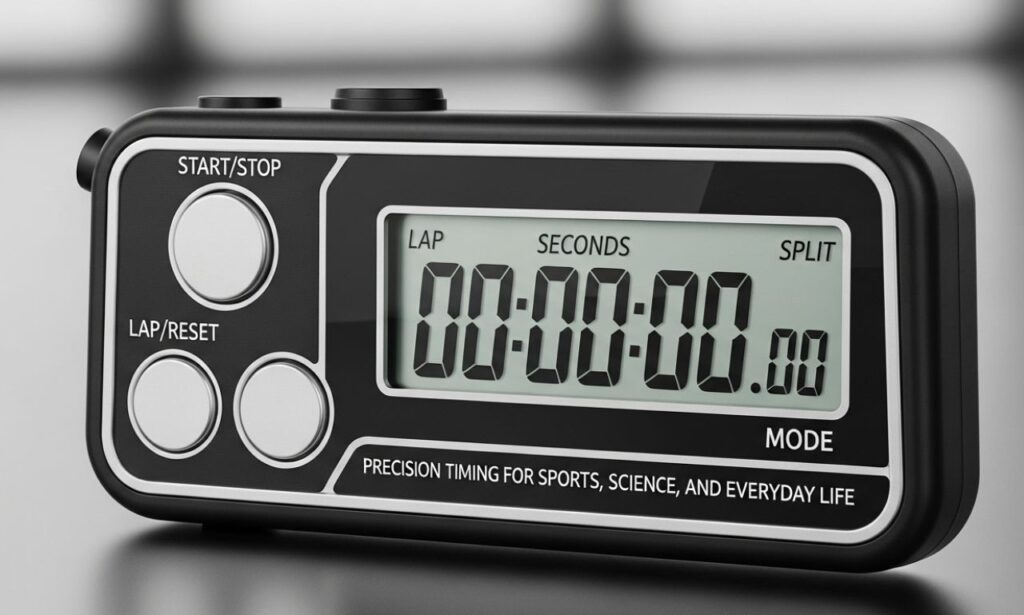
Stopwatch: Precision Timing for Sports, Science, and Everyday Life
A stopwatch is a simple yet essential tool for measuring elapsed time with precision. Used in sports, scientific experiments, and even daily tasks, stopwatches allow accurate tracking of seconds, minutes, and fractions of a second. Over the years, the stopwatch has evolved from mechanical devices to advanced digital timers, making it indispensable in various fields.
History of the Stopwatch
Early Mechanical Designs
The concept of precise time measurement dates back centuries. Early mechanical stopwatches were introduced in the 18th and 19th centuries. These devices used gears, springs, and levers to track time intervals with remarkable accuracy for their era.
Transition to Digital
With technological advancements in the 20th century, digital stopwatches became popular. They offered more accuracy, additional features like split timing, and easier readability. Today, many stopwatches are integrated into smartphones, smartwatches, and fitness devices.
How a Stopwatch Works
A stopwatch functions by starting, stopping, and resetting a timer. Most modern stopwatches can measure:
-
Elapsed Time: Total time from start to stop.
-
Split Time: Time recorded for specific intervals without stopping the main timer.
-
Lap Time: Time for individual laps in a race or repetitive activity.
Digital stopwatches rely on quartz crystals or microprocessors for precise timing, whereas mechanical versions use spring-driven movements.
Uses of a Stopwatch
Sports and Athletics
Stopwatches are widely used in sports to track race times, lap speeds, and training progress. Coaches and athletes rely on stopwatches to monitor performance and improve efficiency.
Scientific Experiments
In laboratories, stopwatches are crucial for experiments requiring exact timing. From chemical reactions to physics trials, they ensure consistency and reliability in research.
Daily Life Applications
Even outside professional settings, stopwatches are handy. They can measure cooking times, workout sessions, study intervals, or any activity where precise timing is important.
Types of Stopwatches
-
Mechanical Stopwatches – Traditional models with analog dials and hand-operated buttons.
-
Digital Stopwatches – Modern devices with LCD screens, multiple functions, and high accuracy.
-
Smart Stopwatches – Apps on smartphones or smartwatches that integrate timers with other features like tracking, alarms, and notifications.
Advantages of Using a Stopwatch
-
Precision: Accurate measurement down to milliseconds.
-
Versatility: Useful in sports, science, and personal activities.
-
Ease of Use: Simple start, stop, and reset functions.
-
Data Recording: Many digital models allow saving multiple readings for analysis.
Tips for Using a Stopwatch Effectively
-
Always ensure the device is calibrated and functioning properly.
-
Use the split and lap functions for complex timing tasks.
-
Keep a manual or digital record of timings for future analysis.
-
For sports training, combine stopwatch timing with performance data for better results.
Conclusion
The stopwatch remains one of the most practical tools for anyone needing precise timing. From its mechanical origins to today’s digital innovations, it has proved invaluable in sports, science, and daily life. Whether you are an athlete, a researcher, or someone who simply wants to track time accurately, a stopwatch ensures that every second counts. Its simplicity, accuracy, and versatility make it a timeless tool for precision in every activity.