
Grapes: Health Benefits, Varieties, and Uses
The word grape refers to the small, juicy fruit that has been cultivated for thousands of years for fresh consumption, juice, wine, and other culinary uses. Grapes are one of the most versatile fruits and are celebrated not only for their taste but also for their numerous health benefits.
From table grapes eaten raw to wine grapes used in beverages, grapes play an essential role in agriculture, culture, and cuisine worldwide.
Types of Grapes
Table Grapes
Table grapes are cultivated primarily for fresh consumption. They are usually larger, seedless, and have a sweet taste. Popular varieties include:
-
Red Globe
-
Thompson Seedless
-
Cotton Candy Grape
Wine Grapes
Wine grapes are smaller, often seeded, and have higher sugar content to support fermentation. Common wine grape varieties include:
-
Cabernet Sauvignon
-
Merlot
-
Pinot Noir
Raisin Grapes
Certain varieties, like Thompson Seedless, are also dried to make raisins, providing a sweet, portable snack with long shelf life.
Health Benefits of Grapes
Rich in Antioxidants
Grapes contain antioxidants such as flavonoids, resveratrol, and vitamin C, which help fight free radicals and reduce oxidative stress.
Heart Health
Consuming grap es may improve cardiovascular health by lowering blood pressure, reducing cholesterol levels, and supporting healthy blood vessels.
Anti-Inflammatory Properties
Gra pes have compounds that may reduce inflammation in the body, which can help protect against chronic diseases.
Digestive Health
The fiber in gra pes supports digestive health and can help prevent constipation.
Nutritional Profile
Grap es are low in calories but rich in vitamins and minerals, including:
-
Vitamin C and K
-
Potassium
-
Antioxidants like resveratrol and quercetin
A one-cup serving of gra pes contains approximately 100 calories, making them a healthy and sweet snack option.
Culinary Uses of Grapes
Fresh Consumption
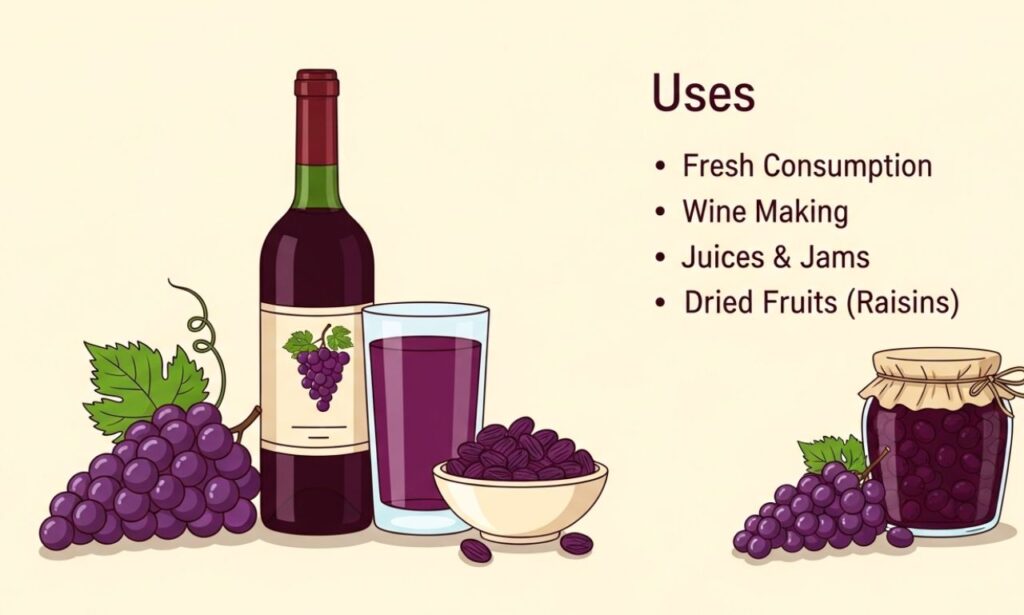
Gr apes are enjoyed fresh as a snack or added to fruit salads, desserts, and cheese platters.
Juice and Wine
Gr apes are pressed to make fresh grape juice or fermented to produce wine, a process that has cultural and economic significance worldwide.
Cooking and Baking
Grap es are sometimes used in sauces, jams, jellies, and baked goods. Raisins, a dried form of grap es, are popular in cookies, bread, and cereals.
Growing Grapes
Climate and Soil
Gra pes thrive in temperate climates with well-drained soil and adequate sunlight. Proper irrigation and pruning are essential for healthy growth.
Harvesting
Gra pes are typically harvested in late summer to early fall. Wine gra pes are picked carefully to ensure optimal sugar content for fermentation, while table gra pes are harvested for size, sweetness, and appearance.
Fun Facts About Grapes
-
Gra pes have been cultivated for over 6,000 years, originating in the Middle East.
-
There are over 8,000 grape varieties grown worldwide.
-
Gra pes can float in water due to air trapped inside their skins.
-
The world’s largest grape-producing countries include China, Italy, and the United States.
Conclusion
Grap es are more than just a tasty fruit—they are a nutritional powerhouse, a versatile ingredient, and a significant part of cultural and culinary traditions worldwide. Whether eaten fresh, juiced, fermented into wine, or dried as raisins, gra pes offer health benefits and delightful flavors for every palate.