
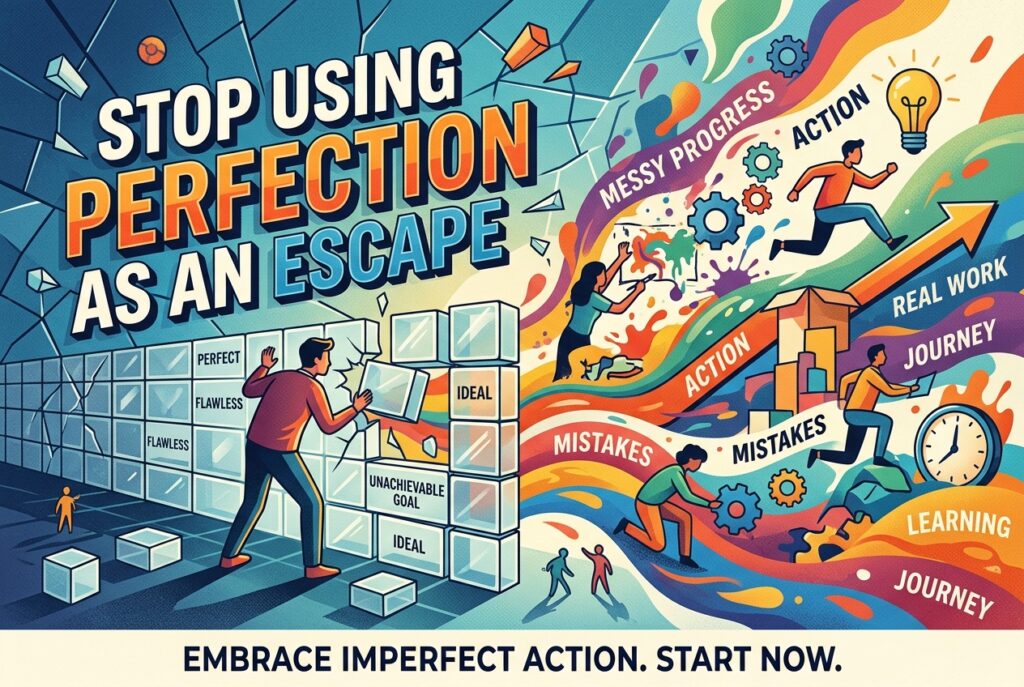
Stop Using Perfection as an Escape
Most people talk about perfection like it is a virtue that got a little out of hand. They frame it as caring too much, aiming too high, or refusing to settle. That version sounds almost noble. It also lets perfection hide in plain sight.
A lot of the time, perfection is not discipline at all. It is a way to stay emotionally safe. If the plan is never finished, the draft is never sent, or the idea is always “still being improved,” then nothing has to face the real world. Nothing can be rejected, misunderstood, or judged. What looks like dedication from the outside is often fear wearing a polished outfit.
That is why perfection can sneak into ordinary adult decisions just as easily as it sneaks into creative work or career goals. People spend months researching the perfect budget, the perfect morning routine, the perfect time to switch jobs, or the perfect financing option, including a fixed rate home equity loan, without ever making the next clear move. The research feels productive. Sometimes it is productive. But sometimes it becomes a waiting room where no one has to risk being wrong.
Perfection Feels Responsible, Which Is Why It Works So Well
Perfection is such an effective escape because it rarely looks lazy. Procrastination usually has bad branding. Perfectionism does not. It shows up carrying a notebook, a color coded spreadsheet, and a serious expression. It says, “I just want to make sure this is done right.”
And to be fair, doing things well matters. Standards matter. Care matters. But high standards and perfection are not the same thing. The American Psychological Association notes that striving for excellence and perfectionism are not the same thing. In fact, it is linked with greater risk for anxiety and depression.
That difference matters because excellence still allows motion. Excellence accepts revision. Excellence understands that learning happens in public sometimes. Perfection demands certainty before action, which is a demand real life almost never meets.
So the perfectionist waits. They revise the email again. They reread the application again. They keep tweaking the business idea, the conversation they need to have, or the plan they supposedly “aren’t ready” to start. Underneath all that effort is often one private hope: maybe if this is flawless, I can avoid discomfort.
The Real Goal Is Not Great Work. It Is Self Protection
This is the part people miss. Perfection is often less about the task and more about the self. If your work feels fused to your worth, then every imperfect attempt feels personal. A mediocre result is not just a mediocre result. It starts to feel like evidence about you.
That is one reason perfection and procrastination are so closely tied. The APA has described a perfectionist style of procrastination in which a person delays completion because unfinished work can feel safer than judged work.
This explains a strange pattern many people know well. They are not avoiding effort. In fact, they may be working constantly. What they are avoiding is exposure. Shipping the project means other people can react to it. Starting the conversation means the answer might be no. Making the decision means living with the fact that no option comes with a guarantee.
Perfection steps in and says, “Let’s prepare a little more.” Fear says, “Thank you.”
Preparation Can Become a Very Polite Form of Hiding
Preparation is useful until it becomes a substitute for contact with reality.
You can see this everywhere. Someone wants to write, so they spend six weeks designing the ideal system for writing. Someone wants to get their finances under control, so they compare tools, read articles, and rebuild the spreadsheet over and over without actually changing a single habit. Someone wants to make a major home decision, so they consume information endlessly but never move toward a conversation, an application, or a concrete deadline.
There is nothing wrong with being thoughtful. The problem starts when thought replaces action for so long that the action begins to feel even scarier. Delay creates pressure. Pressure raises the stakes. Then the task feels too important to do imperfectly, which creates more delay. It is a loop, and it feeds itself.
Perfection loves loops because loops feel busy. Busy is easier to defend than scared.
What Progress Looks Like When You Stop Performing Competence
Once you see perfection as self protection, the solution changes. You do not beat it by becoming tougher or more efficient. You beat it by becoming more willing to be seen learning.
That might mean sending the draft that is solid, not dazzling. It might mean choosing the good plan you can follow instead of the ideal plan you keep redesigning. It might mean letting a decision be informed rather than endlessly optimized.
This does not require recklessness. It requires honesty. Ask a better question than “Is this perfect?” Try asking, “Am I improving this, or am I hiding in it?”
That question has a way of clearing the fog.
If you are improving it, you can usually point to a concrete reason the extra work matters. If you are hiding in it, the reasons get vague. You may tell yourself you need more clarity, more confidence, more time, more certainty. But what you usually want is immunity from regret. No strategy can give you that.
A Better Standard Is Something You Can Actually Live By
Perfection sets a standard that sounds impressive and behaves like a trap. A better standard is one that creates movement.
Useful standards sound more like this: Be thorough, then decide. Be careful, then commit. Be thoughtful, then press send. Learn, adjust, continue.
That is how adults actually build good lives. Not by eliminating error before action, but by responding well after action. Strong people are not the ones who never misstep. They are the ones who can survive being imperfect without turning it into an identity crisis.
And that shift matters far beyond productivity. It changes the emotional climate of your day. When you stop demanding that every move prove your worth, you get your energy back. You spend less time managing appearances and more time participating in your own life.
The Exit Ramp Is Smaller Than You Think
You do not need a personality transplant to stop using perfection as an escape.
Usually, you need one honest act of completion:
- Finish the proposal.
- Book the appointment.
- Start the first ugly draft.
- Make the phone call.
- Choose the workable option.
- Let the small embarrassment happen.
That is the hidden cost of perfection. It does not just delay outcomes. It delays relief. The thing you want, which is confidence, usually does not arrive before the action. It arrives after you survive the action.
So if you have been telling yourself that you are just being careful, just being smart, just getting ready, pause for a second. Maybe you are. But maybe perfection has been renting space in your life by pretending to be responsibility.
If that stings, good. Sometimes clarity does.
Because once you stop calling perfection a standard and start calling it what it often is, an escape hatch from vulnerability, you can make a different choice. Not a reckless choice. Not a sloppy choice. Just a real one.
And real, unlike perfect, can finally move.