
Italian Fig Crop Loss: Causes, Impact, and Agricultural Challenges in Italy
Italy is known for its rich agricultural heritage, and figs are among its valued fruit crops. However, recent concerns about Italian fig crop loss have raised questions about the stability of fig production in the region. Farmers and agricultural experts are increasingly observing fluctuations in yield caused by environmental, economic, and biological factors. Fig cultivation plays an important role in local economies, especially in southern regions of Italy where the climate is traditionally suitable for fruit farming. Understanding the reasons behind crop loss is essential for developing effective solutions and ensuring long-term agricultural sustainability.
Overview of Fig Cultivation in Italy
Fig farming has deep roots in Italian agriculture, particularly in regions such as Sicily, Calabria, and Puglia. These areas provide the warm climate and fertile soil necessary for healthy fig production. Italian figs are known for their quality and are used both domestically and in international markets. However, Italian fig crop loss has become a growing concern in recent years due to changing environmental conditions. Farmers rely heavily on stable weather patterns, and any disruption can significantly affect yield. The importance of figs in local diets and economies makes this issue particularly significant for agricultural communities.
Climate Change and Its Effect on Fig Production
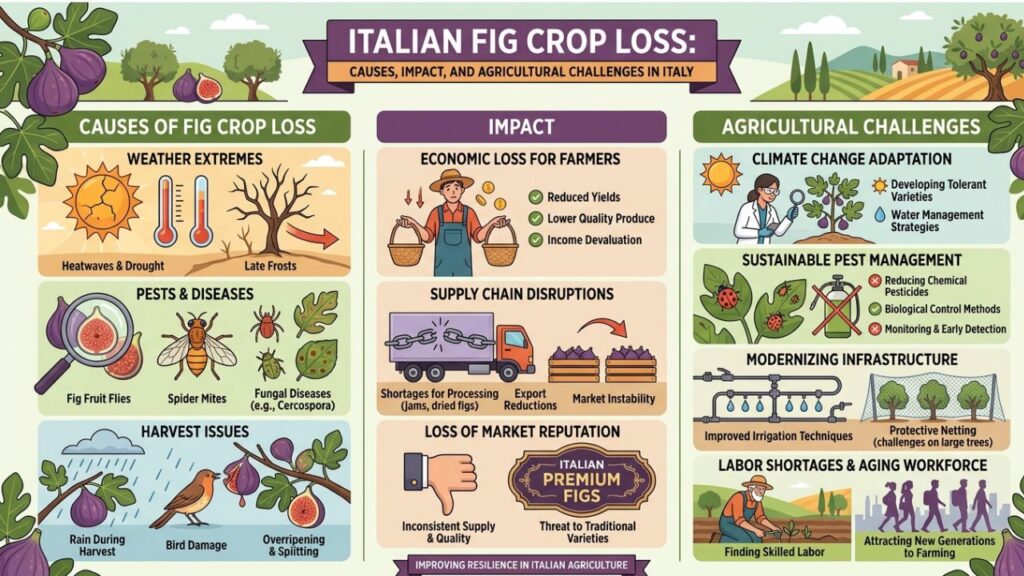
One of the major contributors to Italian fig crop loss is climate change. Rising temperatures, irregular rainfall, and prolonged droughts have created unfavorable conditions for fig trees. These trees require a balanced climate to produce high-quality fruit, and extreme weather events can disrupt their growth cycles. Heatwaves can cause fruit dehydration, while unexpected cold spells can damage blossoms. As climate patterns continue to shift, farmers face increasing uncertainty. This environmental instability not only reduces production but also increases the cost of maintaining fig orchards, making farming more challenging.
Pest and Disease Infestations
Pests and diseases are another significant factor behind Italian fig crop loss. Fig trees are vulnerable to various insects and fungal infections that can damage both leaves and fruit. Common pests feed on the fruit, reducing its quality and market value. Fungal diseases thrive in humid conditions, which can spread quickly through orchards. Once an infestation occurs, it can be difficult to control without proper agricultural management. Farmers often struggle to balance pest control methods with environmental sustainability, adding further complexity to fig cultivation in Italy.
Soil Quality and Agricultural Practices
Soil health plays a crucial role in fig production, and declining soil quality has contributed to Italian fig crop loss in some regions. Intensive farming practices, lack of crop rotation, and insufficient soil management can lead to nutrient depletion. Healthy soil is essential for strong root development and fruit production. When soil conditions deteriorate, fig trees become less productive and more susceptible to stress. Sustainable farming practices, including organic fertilization and proper irrigation techniques, are necessary to maintain soil fertility and support long-term agricultural productivity.
Economic Challenges Faced by Farmers
Economic pressures also influence Italian fig crop loss. Many small-scale farmers struggle with rising production costs, including labor, irrigation, and pest control. Market fluctuations can make fig farming less profitable, discouraging investment in maintenance and innovation. As a result, some farmers reduce their cultivation efforts or shift to more profitable crops. This economic instability affects overall production levels and contributes to declining fig output. Financial support and agricultural subsidies can play a key role in helping farmers sustain fig cultivation despite these challenges.
Water Scarcity and Irrigation Issues
Water scarcity is becoming an increasingly serious issue in many parts of Italy, directly impacting fig production. Fig trees require consistent but moderate irrigation to thrive. However, reduced rainfall and limited water resources have made irrigation more difficult in certain regions. Inefficient water management systems can further worsen the problem, leading to stress in fig orchards. Italian fig crop loss is often linked to insufficient hydration during critical growth periods. Improving irrigation infrastructure and adopting water-saving technologies are essential steps toward addressing this challenge.
Impact on Local Economy and Trade
The decline in fig production has a noticeable impact on local economies, especially in rural areas where agriculture is a primary source of income. Italian fig crop loss reduces the availability of fresh produce for domestic consumption and export markets. This can affect trade relationships and reduce income for farmers and distributors. Additionally, industries that rely on figs, such as food processing and export businesses, may experience supply shortages. The economic ripple effect highlights the importance of addressing agricultural challenges to maintain stability in rural communities.
Government and Agricultural Responses
In response to Italian fig crop loss, various government and agricultural organizations are working to support farmers. Initiatives include research into climate-resistant fig varieties, improved farming techniques, and financial assistance programs. Agricultural experts are also promoting sustainable practices to reduce environmental impact and improve productivity. These efforts aim to stabilize fig production and help farmers adapt to changing conditions. Collaboration between policymakers, researchers, and farmers is essential for developing long-term solutions that ensure the future of fig cultivation in Italy.
Future Outlook for Fig Farming in Italy
The future of fig farming in Italy depends on how effectively current challenges are addressed. While Italian fig crop loss presents serious concerns, there is also potential for recovery through innovation and sustainable practices. Advances in agricultural technology, improved irrigation systems, and climate adaptation strategies can help restore productivity. Farmers who adopt modern techniques may be better equipped to handle environmental and economic pressures. With proper support and continued research, fig cultivation in Italy can remain a valuable part of the country’s agricultural landscape.
In conclusion, Italian fig crop loss is a complex issue influenced by climate change, pests, soil conditions, and economic challenges. Addressing these factors requires a combined effort from farmers, researchers, and government authorities. By focusing on sustainability and innovation, Italy can work toward preserving its fig production and supporting the communities that depend on it.