
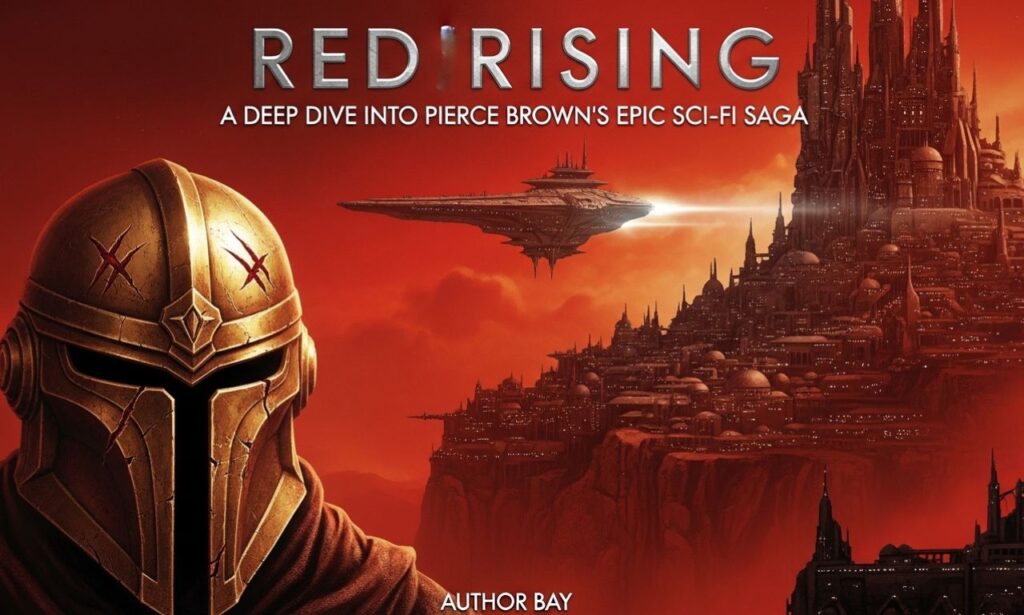
Red Rising: A Deep Dive into Pierce Brown’s Epic Sci‑Fi Saga
Red Rising is a critically acclaimed science‑fiction novel by Pierce Brown that has captivated readers around the world with its compelling mix of dystopian politics, intense action, and philosophical depth. Since its release, Red Rising has become the cornerstone of a bestselling series that blends futuristic world‑building with timeless themes of rebellion, identity, and social hierarchy. Fans of epic sci‑fi and character‑driven narratives have embraced the story for its unique take on humanity’s struggle for freedom and justice.
At its core, Red Rising grabs readers with its thrilling plot and dynamic characters, but it truly stands out due to its exploration of power, oppression, and what it means to fight for a better world.
Introduction to Red Rising
Red Rising is the first book in the Red Rising saga, written by American author Pierce Brown. The story takes place in a future where humanity has colonized the solar system and society is rigidly stratified into color‑coded castes. At the bottom of this hierarchy are the Reds — miners who toil in harsh conditions believing their sacrifices serve a noble purpose. In reality, they are exploited and manipulated by the ruling Gold caste.
The protagonist, Darrow, begins the story as one of these Reds, laboring deep beneath the surface of Mars. When he discovers the truth about his people’s oppression, he undergoes a radical transformation to infiltrate the Golds and spark a revolution from within.
Brown’s narrative combines elements of science fiction, political intrigue, and military strategy, creating a richly detailed universe that explores both personal and societal conflicts.
The World of Red Rising
A Stratified Society
In Red Rising, society is structured by a strict caste system based on colors. Each caste has specific roles and privileges:
-
Golds: The ruling elite — powerful, genetically enhanced, and in control of society’s institutions.
-
Reds: The lowest caste, including miners and laborers who are unaware of the truth behind their sacrifices.
-
Other Colors: Each color (e.g., Blues, Pinks, Grays) represents a unique societal function or profession.
This system creates deep inequality and fuels the tensions that drive the story’s conflicts.
The Solar System Setting
Red Rising spans several planetary environments, including Mars, Luna (Earth’s moon), and other human colonies. Brown’s world‑building emphasizes technological advancements juxtaposed with brutal social realities. The author’s vision brings futuristic societies to life while grounding them in emotional and psychological realism.
Plot Summary of Red Rising
Darrow’s Transformation
The heart of Red Rising follows Darrow, a young Red miner whose life changes forever when his wife, Eo, is executed for a minor act of defiance. Darrow uncovers shocking evidence that the Golds have enslaved his people under false pretenses. Motivated by grief and rage, he joins a revolutionary group known as the Sons of Ares.
The Sons of Ares transform Darrow’s body and identity to resemble a Gold — granting him access to the elite world he once despised. Darrow infiltrates the prestigious Institute, a brutal training ground where Gold youths compete for dominance and leadership. There, he must prove his worth, outmaneuver rivals, and stay true to his mission — all while grappling with the moral complexity of his choices.
Battles and Alliances
Inside the Institute, Darrow faces intense physical and strategic challenges. Friendships form and betrayals occur as factions clash in simulated war games that test loyalty and survival instincts. The novel’s pacing stays relentless, with high‑stakes confrontations that mirror Darrow’s internal struggle between vengeance and justice.
Themes in Red Rising
Power and Oppression
One of the most compelling aspects of Red Rising is its exploration of power structures. The caste system represents extreme inequality, and the narrative questions the morality of systems that devalue human life based on arbitrary classifications.
Through Darrow’s transformation, the story critiques the mechanisms of control that keep societies rigidly stratified.
Identity and Sacrifice
Darrow’s journey forces him to ask difficult questions about identity. By adopting the guise of a Gold, he sacrifices his old life and struggles to reconcile his original values with the ruthless realities of the elite world. This tension drives much of the emotional depth in Red Rising.
Rebellion and Hope
At its core, Red Rising is a story about rebellion — not just physical battles, but the fight for dignity, truth, and autonomy. The characters’ struggles embody the idea that even in deeply oppressive societies, hope can ignite change.
Characters That Shape the Story
Darrow
Darrow is the central protagonist, defined by his transformation from a humble Red to a cunning infiltrator within Gold society. His arc explores resilience, grief, and the personal cost of revolution.
Mustang
Mustang is a formidable Gold who becomes one of Darrow’s strongest allies. Intelligent, strategic, and morally complex, she plays a pivotal role in shaping the direction of the rebellion.
Other Key Figures
The novel features a broad cast of characters, each contributing to the story’s political intrigue and emotional layers. From hardened warriors to brilliant tacticians, these figures bring depth and complexity to the Red Rising universe.
Why Red Rising Resonates
Gripping Storytelling
Pierce Brown’s narrative combines historical inspiration with speculative futurism. His storytelling blends raw emotion with tactical battles, making Red Rising as much a character drama as a sci‑fi epic.
World‑Building and Strategy
Fans of speculative fiction often praise the detailed world‑building and complex social dynamics. The novel draws comparisons to classic works like Ender’s Game and Game of Thrones for its blend of strategy, militaristic conflict, and political maneuvering.
Emotional Complexity
Red Rising doesn’t shy away from the emotional cost of rebellion. Characters grapple with loyalty, loss,and ethical dilemmas, making the narrative resonate beyond its action scenes.
Adaptations and Cultural Impact
With its cinematic storytelling and vivid world, Red Rising has attracted attention from Hollywood and international media. Multiple adaptation projects have been discussed over the years — from television to film formats — though as of 2026 a full adaptation has yet to be released.
The series has also inspired fan art, community discussions, and cosplays, showing its broad cultural appeal. Its influence stretches across sci‑fi communities and readers around the globe.
Red Rising Series Continuations
After Red Rising, Pierce Brown continued the saga with several sequels, expanding the universe and deepening the political stakes:
-
Golden Son
-
Morning Star
-
Later volumes that explore new characters and evolving conflicts
Each installment builds on the foundation of Red Rising, taking readers deeper into the struggle for freedom and the human cost of revolution.
Conclusion:
Re d Risi ng stands out as a modern sci‑fi classic — a bold tale of rebellion, sacrifice, and the search for justice in a divided world. Its gripping plot, multifaceted characters, and thought‑provoking themes make it a must‑read for fans of speculative fiction and powerful storytelling.
Whether you’re drawn to dystopian worlds, strategic battles, or emotional character arcs, R ed Ris ng offers an unforgettable journey that stays with readers long after the last page.