
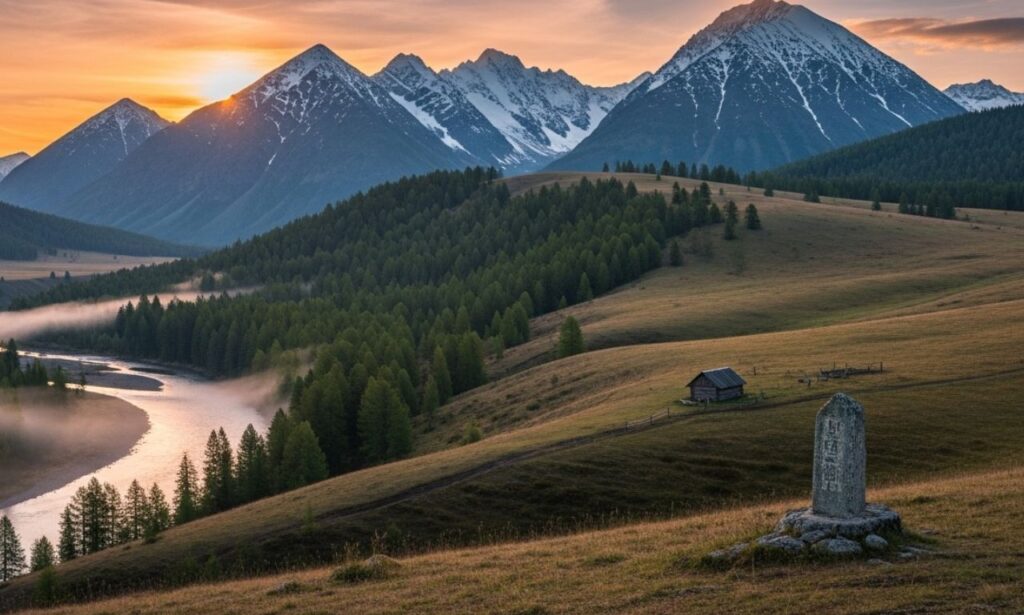
Munții Ural: Geography, History, and Natural Significance
The Munții Ural, known in English as the Ural Mountains, form one of the most significant mountain ranges in the world. Stretching from the Arctic Ocean down to northwestern Kazakhstan, the Munții Ural create a natural boundary between Europe and Asia. This vast and historic range is rich in minerals, biodiversity, and cultural heritage. In this article, we will explore the geography, history, climate, resources, and importance of the Munții Ural in global and regional contexts.
Where Are the Munții Ural Located?
The Ural Mountains extend approximately 2,500 kilometers (1,550 miles) from the Arctic coast to the steppes of Kazakhstan. The mountain chain primarily runs through western Russia and partly into Kazakhstan.
The Munții Ural are traditionally considered the geographical dividing line between Europe and Asia. This continental boundary gives the range special geopolitical and cultural significance.
Physical Geography of the Munții Ural
The Munții Ural are not extremely high compared to other global mountain systems, but they are among the oldest mountain ranges on Earth.
Age and Formation
The Ural Mountains formed around 250 to 300 million years ago during the late Paleozoic era. They were created by the collision of tectonic plates, which led to the uplift of land.
Highest Peak
The highest point in the range is Mount Narodnaya, standing at approximately 1,895 meters (6,217 feet) above sea level.
Regional Divisions
The Munții Ural are often divided into five sections:
-
Polar Urals
-
Subpolar Urals
-
Northern Urals
-
Central Urals
-
Southern Urals
Each region has unique landscapes, from tundra in the north to forested hills and grasslands in the south.
Climate of the Munții Ural
The climate varies significantly from north to south.
-
In the Polar Urals, winters are long and extremely cold.
-
The Central Urals experience a continental climate with moderate summers and cold winters.
-
The Southern Urals have milder temperatures and more agricultural land.
Snow covers much of the range for several months each year, especially in northern sections.
Natural Resources of the Munții Ural
One of the most important features of the Munții Ural is their vast mineral wealth. The region is rich in:
-
Iron ore
-
Copper
-
Gold
-
Platinum
-
Coal
-
Precious stones
Due to these resources, the Ural region became a major industrial center, especially during the Soviet era. Mining and metallurgy remain economically significant today.
Biodiversity and Wildlife
The Mu nții Ural support diverse ecosystems.
Forest Zones
Large parts of the range are covered in taiga forests consisting of pine, spruce, and birch trees.
Wildlife
Animals found in the region include:
-
Brown bears
-
Wolves
-
Lynx
-
Elk
-
Arctic foxes (in northern areas)
The natural habitats vary depending on altitude and latitude, contributing to ecological diversity.
Historical Importance
Throughout history, the Mu nții Ur al have played an important strategic and cultural role.
Early Exploration
Russian explorers and settlers expanded eastward across the Urals during the 16th and 17th centuries, opening the way to Siberia.
Industrial Development
In the 18th century, the region became a mining and metallurgical hub. During World War II, many Soviet factories were relocated to the Ural region for protection from invasion.
Cultural Significance
The mountains symbolize the boundary between European and Asian Russia. This dual identity has shaped cultural traditions and trade routes for centuries.
Tourism and Outdoor Activities
Although less famous internationally than other mountain systems, the Mu nții Ural attract adventurers and nature lovers.
Popular activities include:
-
Hiking
-
Skiing
-
Rock climbing
-
Wildlife observation
-
River raftingNational parks and protected areas help preserve the region’s natural beauty.
Cities Near the Munții Ural
Several major cities lie along or near the mountain range, including:
-
Yekaterinburg
-
Perm
-
Chelyabinsk
These urban centers serve as economic and cultural hubs for the region.
The Munții Ural as a Continental Boundary
Geographers widely recognize the Mu nții Ur al as part of the conventional boundary between Europe and Asia. While the division is more cultural than physical, the mountains remain a symbolic line separating two continents.
This distinction makes the range globally significant in discussions about geography and geopolitics.
Environmental Challenges Facing the Munții Ural
Industrial activity has contributed to environmental issues such as:
-
Air pollution
-
Water contamination
-
Deforestation
-
Habitat disruption
Efforts are ongoing to improve environmental sustainability and protect ecosystems in the region.
Conclusion
The Mun ții Ur al are far more than just a mountain range. They represent a natural border between continents, a treasure trove of mineral resources, and a region rich in history and biodiversity. Stretching across Russia into Kazakhstan, the Ural Mountains have influenced trade, industry, culture, and geography for centuries.
From ancient geological origins to modern industrial importance, the Mu nții Ural continue to shape the landscape and identity of Eurasia. Whether viewed from a geographical, historical, or environmental perspective, they remain one of the world’s most fascinating mountain systems.