
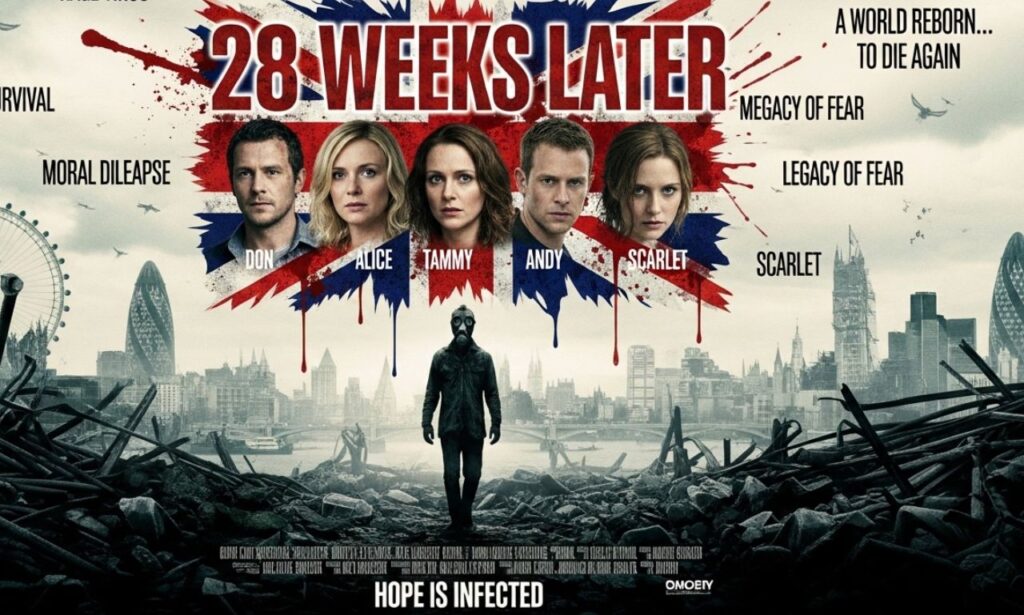
28 Weeks Later: Plot, Themes, Characters, and Legacy
28 Weeks Later is a British post‑apocalyptic horror film released in 2007 and directed by Juan Carlos Fresnadillo. As the official sequel to 28 Days Later, 28 Weeks Later continues the story of the devastating Rage Virus and examines what happens when the epidemic — thought under control — is reignited with even deadlier consequences. The film blends intense action, bleak atmosphere, and horror to explore themes of survival, human error, and the fragility of order in a world overrun by terror.
The Story of 28 Weeks Later
Six Months After the Outbreak
In 28 Weeks Later, the Rage Virus outbreak has all but wiped out the population of Great Britain. Six months after the events of the original film, NATO and U.S. forces declare the virus contained and begin a reconstruction effort in London. Refugees are encouraged to return to a heavily guarded “safe zone” on the Isle of Dogs.
Family Reunion and New Threats
Donald “Don” Harris reunites with his children, Tammy and Andy, who were abroad during the initial chaos. Still traumatized, Don lies about abandoning their mother, Alice — a decision that sets off a chain of tragic events. When Alice is rediscovered alive yet asymptomatic for the virus, her genetic state becomes a potential key to a cure but ultimately triggers a catastrophic resurgence of infection.
Chaos in the Safe Zone
Once Alice’s infection spreads inside the supposed sanctuary, the situation deteriorates rapidly. Civilians and soldiers alike fall victim to the Rage Virus, and the U.S. military’s drastic containment measures lead to panic and widespread violence. With society once again collapsing, the narrative revolves around survival, sacrifice, and desperate attempts to escape as London descends into chaos.
Key Characters in 28 Weeks Later
-
Don Harris: A guilt‑ridden father whose poor choices catalyze the second outbreak.
-
Alice: Don’s wife, whose asymptomatic condition reveals critical information about the virus but thrusts everyone into peril.
-
Tammy and Andy: Don and Alice’s children, whose survival becomes a glimmer of hope amid destruction.
-
Military Personnel: Including Sgt. Doyle and Dr. Scarlet, who attempt to navigate military protocol and human compassion.
Themes and Tone
The Fragility of Order
28 Weeks Later highlights how quickly control can be lost in a crisis. The military’s attempt to rebuild normalcy — even after tremendous loss — is undermined not only by the virus’s resurgence but by human vulnerability and emotional decision‑making.
Human Error and Horror
Unlike many horror sequels that focus solely on scares, 28 Weeks Later often attributes catastrophe to misjudgment and desperation. Don’s reunification with his children and his emotional breakdown are major drivers of the plot’s escalation, illustrating the dangers of irrational choices in a deadly setting.
Atmosphere and Action
The film’s tone is bleak and frantic, using claustrophobic environments and sudden outbreaks of violence to sustain tension. With the infected depicted as rapid and unrelenting, 28 Weeks Later aims to keep audiences on edge throughout its runtime.
Visual Style and Direction
Directed by Juan Carlos Fresnadillo, 28 Weeks Later retains a kinetic and gritty visual style that mirrors the original 28 Days Later. The film employs shaky, immersive camerawork and intense set pieces that emphasize panic and disorder, especially during scenes of stampedes, close combat, and military engagement.
Reception: Praise and Criticism
Positive Reactions
Critics noted 28 Weeks Later for its suspenseful atmosphere and action‑driven plot. Its score on Rotten Tomatoes reflects generally favorable responses from reviewers who appreciated the film’s intensity and visceral direction.
Common Criticisms
Despite its thrills, some critics and viewers felt the story and character development were lacking compared to the first film. Many pointed to predictable plot points and decisions that stretched plausibility, detracting from the emotional depth of the narrative. Others criticized the film’s pacing and motivations of key characters.
Legacy and Place in the Franchise
28 Weeks Later occupies a unique place in the 28 Days Later franchise. While it may not have achieved the iconic status of the original film, it expanded the world of the Rage Virus and inspired later continuations of the storyline. It serves as a bridge between the raw, thematic terror of the first film and newer sequels that further explore the virus’s long‑term impact.
How to Watch 28 Weeks Later
Today, 28 Weeks Later is available on major streaming platforms and on home video formats. Fans of horror and post‑apocalyptic cinema still revisit the film for its intense set pieces and its contributions to one of the most influential modern zombie narratives.
Conclusion:
28 Weeks Later continues the harrowing tale of the Rage Virus with a story that combines horror, emotional tension, and societal collapse. While it may divide audiences — some praising its action and others critiquing its character work — the film remains a significant sequel in the franchise. Its portrayal of desperation, flawed decisions, and uncontrollable chaos adds depth to the wider 28 Days Later universe, making it a compelling watch for horror enthusiasts and franchise fans alike.