
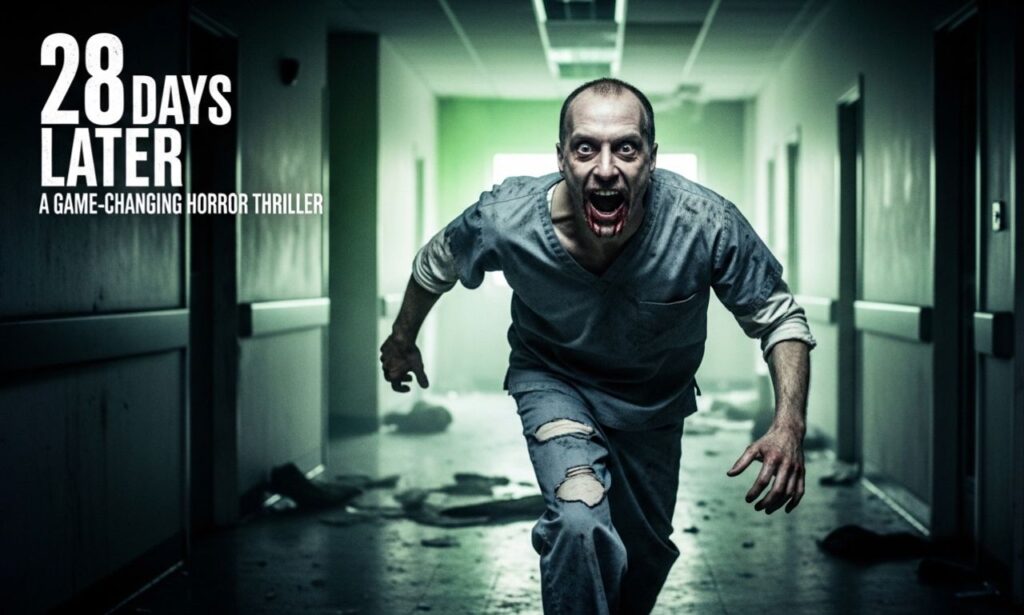
28 Days Later: A Game-Changing Horror Thriller
28 Days Later is a 2002 British post-apocalyptic horror film directed by Danny Boyle and written by Alex Garland. The movie is widely credited with revitalizing the zombie genre, introducing a fast-moving, terrifying version of infected humans rather than the traditional slow zombies of earlier films.
The story begins with a virus outbreak in the United Kingdom, leading to societal collapse. The film combines intense horror with social commentary, exploring the fragility of civilization when faced with extreme circumstances.
Plot Overview
The narrative of 28 Days Later starts with animal rights activists accidentally releasing a highly contagious “Rage” virus from a laboratory. The virus spreads rapidly, turning those infected into violent, uncontrollable beings.
The protagonist, Jim, wakes from a coma 28 days after the outbreak to find London deserted and in chaos. Along with survivors Selena and Hannah, Jim navigates the dangerous, infected-ridden city, facing not just the virus but the darker side of human nature.
The film’s tension arises from both the external threat of the infected and the internal threat of humanity’s moral collapse, making it a gripping survival story.
Key Characters
-
Jim – The central character who must adapt to a world overtaken by the infected.
-
Selena – A strong, resourceful survivor who partners with Jim.
-
Hannah – Another survivor whose fate highlights the film’s brutal realism.
-
Major Henry West – Represents the corrupt side of humanity as survivors encounter groups with questionable morals.
The interactions between these characters highlight the ethical dilemmas that arise in a post-apocalyptic world.
Themes Explored in the Film
28 Days Later goes beyond being a traditional horror movie by exploring several deep themes:
-
Survival vs. Morality: The film questions whether moral principles can survive in extreme conditions.
-
Fear and Isolation: It portrays the psychological impact of sudden loneliness and societal collapse.
-
Human Nature: The infected represent primal rage, while the uninfected showcase both compassion and cruelty.
-
Science and Consequences: The virus outbreak reflects concerns about scientific experimentation and its potential dangers.
These themes contribute to the movie’s lasting relevance and appeal.
Cinematic Style and Impact
Director Danny Boyle employs a distinctive visual style, including:
-
Handheld Camera Work: Adds a sense of immediacy and chaos.
-
Desolate Landscapes: Empty streets of London evoke isolation and despair.
-
Fast-Moving Infected: Redefines the horror genre, influencing modern zombie films like World War Z.
The film also features a haunting score by John Murphy, amplifying tension and emotional resonance throughout the story.
Cultural Impact
28 Days Later had a profound influence on horror cinema and popular culture:
-
It revived interest in zombie movies, inspiring a new wave of fast-zombie films.
-
It highlighted the potential for horror films to carry social commentary.
-
It influenced video games, TV shows, and other media exploring post-apocalyptic survival.
The film’s legacy continues to be celebrated among fans of both horror and thriller genres.
Conclusion
28 Days Later is more than just a zombie movie; it’s a study of humanity under extreme conditions. By blending horror, action, and social commentary, it set a new standard for the genre. Its innovative approach, memorable characters, and thrilling narrative make it a must-watch for fans of suspenseful cinema.